How to Preserve Wedding Flowers: A Step-by-Step Guide
Your bouquet won’t look the same in forty-eight hours. That isn’t a warning. It’s simply what flowers do. They soften, the stems weaken, and the petals begin to shift in color. And in that small window after the wedding, a question shows up fast in search results of couples in Columbus and brides across the country:
How do you preserve wedding flowers?
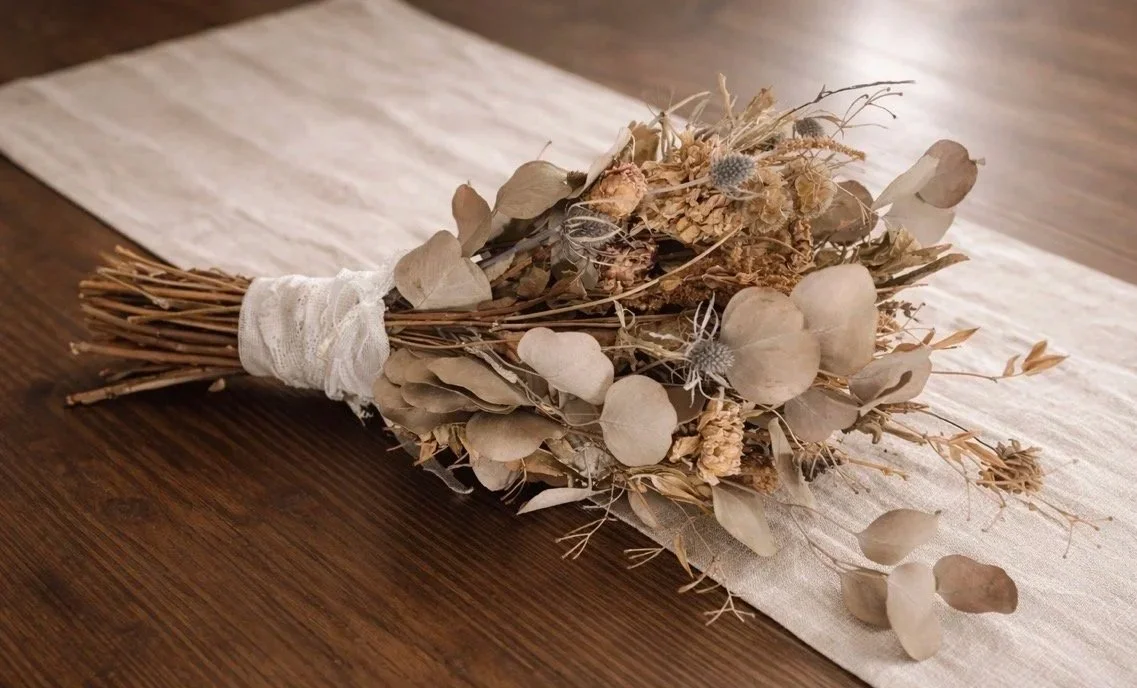
Even if your bouquet is already dried and years old, preservation through transformation is an option.
This step-by-step guide walks through the most common ways couples preserve a wedding bouquet. From simple at-home options to professional flower preservation, you can choose what feels right and act before the blooms change too much.
Step 1: Decide Which Flowers to Preserve
Not every bloom from the bouquet needs to be preserved. Some couples choose to preserve the entire bouquet, while others select a few meaningful flowers like the central roses, peonies, or hydrangeas that defined the arrangement.
Choosing the most important blooms helps focus the preservation process while still honoring the memory of the bouquet.
Step 2: Begin the Drying Process
The most important part of flower preservation is removing moisture from the petals. Fresh flowers contain a great deal of water, which causes them to wilt and decay over time. Drying the flowers allows the petals to maintain their structure while preventing deterioration.
There are several ways flowers can be dried: air drying, pressing, silica drying, or professional preservation techniques.
Each approach removes moisture at a different rate, which affects how the flowers look once preserved.
Step 3: Handle the Flowers Carefully
Once flowers begin drying, they become extremely delicate. Petals that were once soft and flexible can become fragile. Even small movements can cause them to bend or break. Because of this, preserving flowers requires patience and gentle handling. Many preservation methods involve slowly repositioning petals or separating blooms to allow them to dry evenly.
Taking time during this stage helps protect the natural beauty of the flowers.
Step 4: Choose the Preservation Method
After flowers are dried, they can be preserved in several different ways. Some couples choose pressed flower preservation, where the petals are flattened and arranged into artwork. Others choose resin preservation, which encases flowers inside a clear hardened structure. Another approach is floral artwork, where dried petals are arranged into a new composition that honors the original bouquet.
Each method creates a different type of keepsake, but the goal remains the same: preserving the flowers so they continue telling the story of the wedding day.
Step 5: Allow Time for the Process
Flower preservation is not an instant process. Drying flowers alone can take several weeks depending on the types of blooms involved. Designing and creating the final preserved piece can take additional time. While the process requires patience, it ensures the flowers are handled with care and preserved as beautifully as possible. Meaningful objects often take time to create.
Why Couples Choose Professional Flower Preservation
Some couples attempt to preserve wedding flowers themselves. Others choose to work with a preservation studio. Professional preservation allows flowers to be handled with specialized drying techniques and careful design processes that help maintain their structure and color. Many require your bouquet to be shipped within days of the wedding.
For many couples, professional preservation also allows the flowers to become something more than a keepsake.
They become artwork to be displayed in the home and passed down through generations.
When Wedding Flowers Become Something Lasting
Wedding bouquets are meant to be temporary. Their beauty is part of the moment they accompany. But when flowers are thoughtfully preserved, they can become something that lasts far beyond the wedding day. The blooms that once existed for a single moment become reminders of the beginning of a shared life.
Over time, those preserved petals may even become small heirlooms connected to the story of the day they were first carried down the aisle.
